Friday, July 5, 2013

Two Worlds in One

The other day I had an everyday, yet enlightening experience.  The country of South Africa has the greatest wealth gap among all the nations in the world.  It is most realized in the cities where slums are sometimes on the other side of a wall from gated communities where houses rival the grandeur of many in the U.S. (even the area I’m from).  However it is also around national parks and private game reserves that the magnitude of lifestyles is truly black and white.  Wealthy South Africans and foreign tourists spend upwards in the thousands of US dollars to stay at fancy resorts or rent gorgeous cottages with gorgeous views of wildlife and scenery.Yet just outside the guarded gates and electric fences (intended for both man and beast) local people are living the most basic of lives, most absent of income or employment.  

Living here you would think it would be hard to forget about the majority of the country living beside you in such poverty, a lifestyle none of us can imagine. However, admittedly it is easy to put that reality out of your mind and continue with your own life and troubles. 
 
The Soweto slum outside Johannesburg
The other day my friend and I pulled out of the cobblestone lined driveway rot ironed guarded gate of his timeshare to go to Kruger National Park, the music was blasting, the sunglasses were on, and life seemed euphoric.  So when the group of 4 young black boys, not older than 7-8 years old standing on the corner all gave us the finger and shouted Swati swears at us, our immediate response was astonishment and irritation.  My friend said a few things about them and then I had a moment of clairvoyance.

I don’t blame the kids.  I am the epitome of their envy.  Everything I have in my life is everything they desire and will most probably never have. 

I have more than one shirt, pants, and pair of shoes. I went to a school that I didn’t have to walk 5 miles to in the early morning and when I got there, there was a competent teacher and books to use.  I own a bicycle. If I get sick I can afford to see a doctor and receive surgery or basic medicine.  I had more money in my pocket than they may ever earn in their lifetime.  The list goes on and on. 
 
Boys in a slum I visited 3 years ago
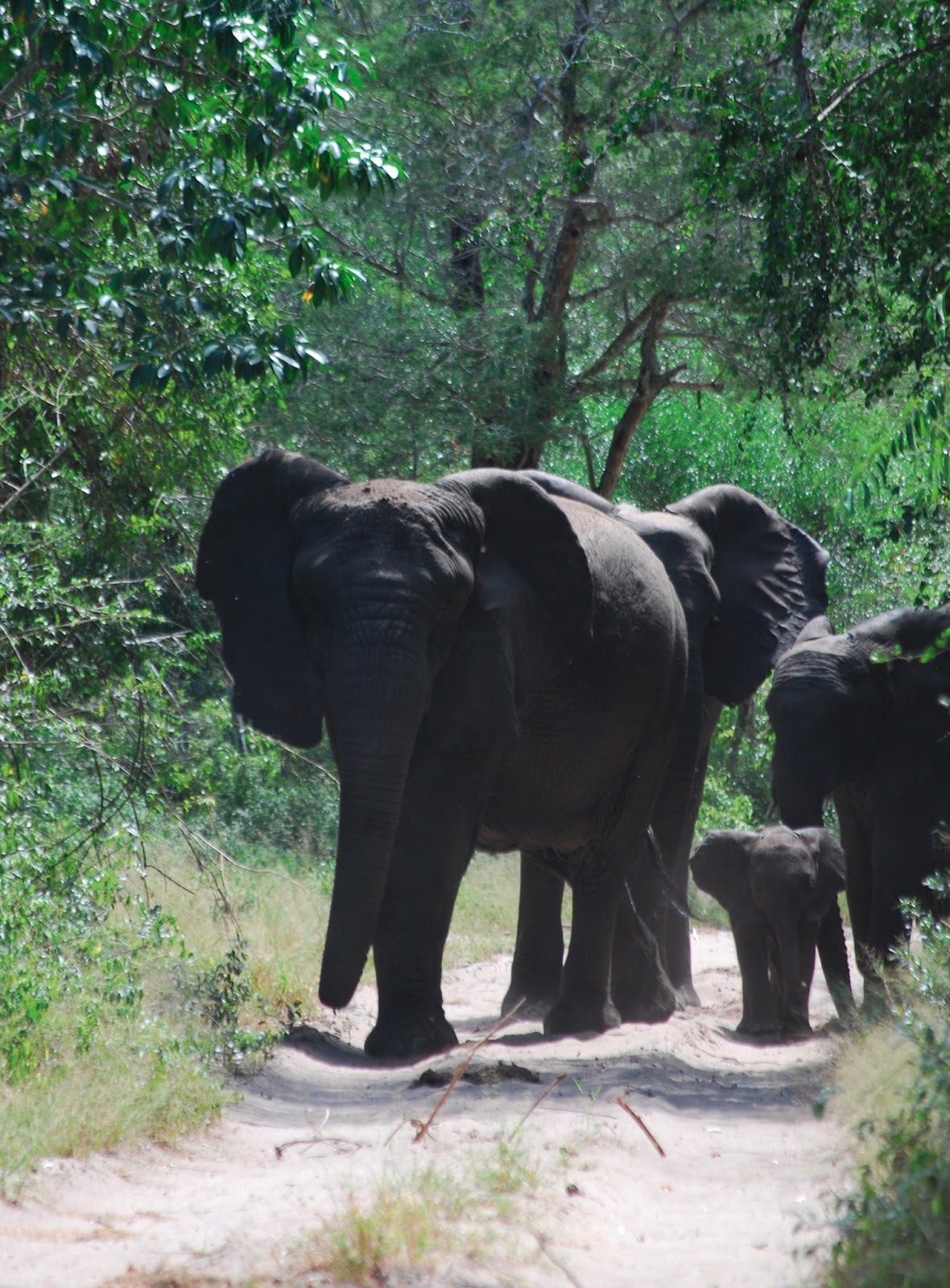
But perhaps the saddest thing for me to consider was that these boys had probably never seen an elephant, which on the other side of the wall they stood next to there were some 17,000.  They likely would never get a chance to go into the park they lived next to and see the amazing natural beauty that they were born into. And because of that, why should they care about that world of exclusive entrance and magnificence.  Why should they not poach or be concerned with the wildlife issues that they are in the midst of.  Their whole lives a Garden of Eden and a land of plenty lay beyond an electric fence and a locked gate, to which they did not and would not have to the key to.

It’s a depressing reality that the world will likely never be a fair and equal place.  Where the happenstance of where one is born would not hinder ones experiences and quality of life.  However, the wealth gap in Southern Africa and most other countries around the world is only growing and with it rifts of misunderstanding, prejudice, and racism.  

Those boys did not chirp us because we were white, they did so because life isn’t fair, because they were born in a hut made of cardboard and stones and I in a top notch Yale New England hospital in Greenwich, Connecticut.  


It is experiences like this that few living in the modern world get to experience and the few who do likely will not carry with them everyday.  However I know I carry those boys with me in my mind.  While I may forget them from time to time, they remind me not to take two servings when I will only eat one and not to waste what could be used for something else. But most importantly I’m reminded that not matter how bad my life is, I will always have more than them and therefore I have no reason to be unthankful or entitled or upset….I am humbled by their existence and appreciative of every experience I have.

Tuesday, July 2, 2013

The Big 5 in 24 hours

Yesterday I returned from a week in the Mpumalagna province of South Africa.  Similar to 2 weeks ago, I was staying with my friend Graeme and his family in Nelspruit for a few days, however afterwards traveled north to Kruger National Park.  We were in Nelspruit this time because of an Afrikaans festival called Innibos, which means "In the bush".  Innibos is a music and arts festival that mostly a festival for Afrikaans to celebrate their culture, food, and as all good Afrikaans people do, have a few too many beers. However for my friend Graeme, it marks the winter university break when all his friends come back from school to catch up and have a reunion.  For me it was the largest gathering of Caucasians I've seen since leaving JFK airport!
Innibos beer tent...lots of Afrikaans men

Innibos was a great time where I met a lot of people and listened to a lot of live bands.  Since being in South Africa I have learned some Afrikaans, but my pronunciation of execution of many words puts me as a dead ringer as a foreigner. The issue is at Innibos, everyone speaks Afrikaans.  An interesting encounter I had in the rest room involved 3 men speaking to me in Afrikaans across a urinal in hostile voices.  Luckily my use of the words I knew and could pronounce quelled the tension and we all urinated in peace.

During the day we would go to the local driving range.  I'm not a golfer at all, however this was definitely the most beautiful setting I've seen a driving ranger in (far better than the Bronx Golf Center off Gun Hill Rd. adjacent to I-95 in NYC). Interestingly there are no ball collecting lawnmowers, just a group of 5 black laborers out there picking them up by hand.  So when you hit a long drive near them you have to shout out to them.  $1 for a quart of beer at the counter and the old woman asks you "are you just gonna open it with your eye or do I have to go get an opener?"
Gooch and Simon hitting some balls

The other interesting part of being in Nelspruit was staying with my friend's family.  It's been awhile since I have been in a family setting and I have to admit it was very pleasant reminder of those I love back home.

On Saturday we all traveled to a time share on the southern border of Kruger National Park, just shy of the Mozambique border to stay with Graeme's aunt and uncle.  The complex was very nice and their apartment has a veranda that overlooks the Crocodile River in the park.  When we arrive there were 2 elephants in the river and a buffalo just across the way.  After an amazing sunset, a fire, a lot of wine-driven conversation we woke up the next morning to enter the park.

Ele in Crocodile River
Sun rise the next morning
The Wolfard family watching the wildlife and scenery on their deck

Graeme and I drove 5 hours through the park to meet up with our other friends, one of whom has a house inside the park where we stayed the night.  Kruger is South Africa's largest park, it would take you 18 hours to drive from the bottom to the top at the speed limit.  It is the most amazing park with animals literally around every corner, elephant randomly walking across the road, and gorgeous scenery.
Big croc in Kruger
A large pod of hippos and crocodiles 


Male Kudo at a watering hole
A group of warthogs 

Just after entering the park we saw 2 large male lions relaxing in the distance and saw countless other animals including hippos, crocs, eles, buffalo, and more. The park was 34 degrees (95) which seems ridiculous considering it is the middle of winter!


Buffalo, hippos, and impala 

White rhino

Gooch and I at Stevenson-Hamilton, a koppie overlooking the park

Meeting up with our mates, we relaxed on the top of a dam to watch the sun set as pods of hippos made echoing bellows across the lake. For some reason all sunsets in Africa are amazingly beautiful and seem to last forever.
The chaps at the dam


Just after the sun set, a large cat emerged from the bushes next to the dam in between our cars.  Fearing it was a lion we all quickly got into the cars and watched as a young leopard walked along the dam.  At night a leopard is just as scary as a lion, as they will stalk you and leap from up to 30 feet away to wrap their claws around your neck.  This meant that we had seen the Big 5 within 8 hours of being in the park.  The Big 5 are the 5 most dangerous animals in reference to hunting, but are known as the most notable mammals; Elephant, Rhino, Leopard, Lion, & Buffalo. 
Leopard taking a crap


That night as 12 of us sat around the fire, large bush babies (a koala sized primate that comes out at night) and greater spotted genets (a large cat looking animal) jumped around the trees overhead, as lions roared in the distance and hyena howled just around the corner.  Nights in the bush are spectacular! The next morning we packed up and came back to Pretoria.

It was a very short trip with only 2 days in the bush, but there is still much work to be done on the academic front.  Also in 2 weeks I am leaving for Namibia, so it's about time I started getting aggressive with my exercising if I don't want to get stuck in the desert mountains.


Tuesday, June 18, 2013

Nelspruit and the Rugby


This past weekend I traveled to Nelspruit to stay with my classmate and good friend Graeme (aka Goochi).   Nelspruit is 3 hours east of Pretoria, very close to the border of Mozambique and Swaziland and is the nearest city to the famous Kruger National Park.  This area of South Africa is called the Lowveld (the “low bush”), because as you travel from Pretoria you come down off a giant plateau called the Great Escarpment that makes up the horn of Africa.  Driving for an hour down into the lowveld the landscape changes from grassland to savanna due to temperature.  Savanna is the most typical African biome and is commonly called the African “Bush” because of the constant layer of grass with small trees and bushes mixed in.

City of Nelspruit

We went to Nelspruit to get away from the hustle and bustle of Pretoria and most importantly to watch the Rugby.  I’ve always found it difficult to watch organized sports such as American football, however there is something about rugby that excites me.  First in rugby there is constant action; there are two 40 minutes halves where there is few pauses in the game.  Secondly is that rugby is an international sport.  Unlike American sports such as baseball, football, hockey, and basketball, which are all privately owned teams that may represent an area, but most players are from all over the country or other countries.  In Rugby you have regional teams that represent a province or region and then there is a national team called the Springboks. 


In what is called Super Rugby, teams from 15 major rugby countries such as New Zealand, England, Australia and others compete against each other.  Going to a Super Rugby game is truly a national experience as all South Africans are there to support their country. Unlike many American sports, when a super rugby game is playing the entire city and country is involved, because it is truly international competition (where South Africa happens to be one of the best teams), it’s sort of like having the Olympics every month. 

On Saturday we donned our South African jerseys, occupied and supported our local pub at 10am, before marching in a procession to the stadium.  Helicopters and jets flew overhead with “Go Bokke” written across their sides, the Afrikaans chant for the Springboks. In the stadium we first watched Samoa take on Italy in an exhibition game prior to the main event. In a stadium of 45,000 a sea of green and gold proudly sang the national anthem of Nkosi Sikele’iAfrika and thousands of the rainbow nation’s flags were feverishly waved…it was hard not to feel South African. 

Gooch and I supporting the boks 

You may have seen the movie Invictus about how Nelson Mandela (Morgan Freedman) and Springbok captain Francois Pienaar (Matt Damond) united the nation through winning the 1995 World Cup. This sport once represented apartheid and the white community, but now being in that stadium it truly has brought the country to life. Playing the Scottish (who are not the best team), the Springboks put forward their second string team at first, however after a sorry first half they upped their game to win 30-17. Two weeks ago the Springboks played the American team and beat them 109-0. 


After the game we traveled back to the pub on a bus where a race fight almost ensued amongst my friends and a group of other locals, reminding us that perhaps tensions were not completely dissolved. However at the pub we got the chance to meet and have drinks with the players! Including Eben Etzebeth the 6’8” lock and Booby Skinstand longtime flanker and previous captain of the Springboks.


As of today I am finished with my exams after over a month of work and I’ve been in ZA for 5 months…I’m looking forward to more great weekends like this one.

Tuesday, June 11, 2013

But first here's Bob with the weather....


    While most of you are getting geared up for summer back home, here at the bottom of the earth winter has definitely arrived.  Winter in Pretoria means no rain, no humidity, and no central heat.  Temperatures at night can dip into the 30’s(2-5), but usually stay in the low 40’s(5-7).  Once the mornings heat up the temperature go into the 60°’s and 70°F’s (20s) and is actually quite pleasant.  With never a cloud in the sky you can still feel the heat of the African sun as if you were on the beach.

    It doesn’t sound too bad does it? But there’s a catch and the reason why I’m sitting here wearing pants, socks, and a sweater.  When people build houses and buildings in South Africa, they have a decision to make.  Would I rather bake in the summer or freeze in the winter, obviously most have chosen the latter. So most buildings are designed to stay cool during the long extremely hot and humid summers and offer no insulation for the 3 months of winter. It makes sense since summer is most of the year and quite intense. 

     Now any of you who know me at all are wondering, “why the hell are YOU wearing pants”! For those who don’t know my past; first I have always been known to be a 4-season shorts and sandals attire person.  Then after living in Alaska where winter temperatures are commonly -40°F(-40°c) and the lowest I’ve experienced is -59°F (-51°C), there are very few “normal” temperatures that bother me.  I can remember when after weeks of -30°(-34°C) or so in Alaska, it would warm up to 0°F(-18°C) or 5°F(-15°C) and we would go out in shorts and sandals and sun bathe.  This last summer I worked in Canada where it snowed quite frequently throughout July and June in the mountains.  Thus I’ve always have had thicker blood and am rarely seen in pants, unless social circumstances require it. 


      However it seems like the African sun has thinned my blood a bit.  Also the 7’x7’ single pan glass window next to my bed makes sure that I never get warm in my flat when the sun goes down. It is that constant cold that starts to get to you. Even when I go into school, I walk down the hallways and see professors in big winter coats huddled around electric heaters.  Most people do not think that Africa can get cold, but even last year it snowed in Pretoria for the first time in 10 years.  During the day in the hot sun I watch the leaves fall off the trees, yet most trees are evergreens (not pines).  So you still have typical African trees flourishing in the cool hot sun, but an autumn scene of crunchy fallen leaves surrounds them.  

It is definitely an interesting experience!  I’m not at the point of needing a coat yet, but I am wearing pants at night.

Saturday, June 8, 2013

A hipster day in Jozi

   Today I went to the iconic city of Johannesburg for the first time or Jozi or Joburg as locals call it.  A mere 40 minute train ride on Africa’s first 21st century train system called the “Gautrain” takes you from Pretoria to the city center of Johannesburg.  After emerging from the train station we found ourselves in the center of Sub-Saharan Africa’s largest city, a massive urban sprawl of towering new age skyscrapers along side intense poverty.
 
The Gautrain.  It only goes back and forth from Pretoria, the airport, and Johannesburg and is often not on time or running since people are constantly stealing the electrical conductors for scrape. 
Walking briskly down the streets, my three female companions and I felt out of place as the only well dressed Caucasians walking rather than driving.  However it is hard not to first notice the smell of human urine and feces down most streets.  Hairdressers, hair extension and cell phone shops line the street level in between massive abandoned buildings all with signs “for let”.

Notorious for it’s crime, it’s hard not to think of the number of murders that occur in this city as well as the accounts of friends who have been mugged in recent days. Friends who go to one of the universities in downtown Joburg have claimed to carry dummy phones and wallets in an attempt to fool criminals.

However 5 blocks from the train station a magnificent transformation occurred, as the filth-ridden streets suddenly opened to an area of boutiques, pubs, penthouses, and general prosperity.  We were going to the Kitchener’s Carvery Bar, a 100+ year old hotel and pub that was hosting a performance by South African singers and musicians Victor Wolf and Andre van Rensburg.
 
Kitchener's Carvery Bar, named after a British military hero from the Boer Wars.
Sitting in a large smoking room, of 19th century English décor where English explorers, hunters, and entrepreneurs once puffed away at pipes with gin in hand, we lounged to acoustic folk Afrikaans and English music.  In this room the old Africa met the new, young and old folk, black and white sat side by side, white women danced with the small black children playing with their plastic swords.  While outside a free concert was starting in the streets, skateboarders and break dancers were showing off their talent, and the local farmers market was full of fresh food and unique cooking. 


I was told by some of the Johannesburg natives that 10 years ago we would have been shot or stabbed if we were standing where we were.  30 years ago we would have been arrested for just hanging out with people of another color, let alone enjoying each other’s company.  However as we stood there in the middle of a giant street party, a diverse crowd of black, white, brown, yellow, and others joined in around us.  
Andre Van Rensburg avant-garde composer, producer and instrumentalist

Victor Wolf, formerly huge Afrikaan singer Riku Lätti 

Johannesburg is known as a more "English" and liberal city, whereas Pretoria is very "Afrikaans" and much more conservative.  Despite the crime and the horrible poverty, even in the middle of the city, Johannesburg has a unique culture going for it, that can only be described as Williamsburg Brooklyn in NYC. It could be all the hipsters, but the diversity and mix of culture and music was so unique and amazing to be in the middle of. 

A truly unique experience and in many ways reminded me of being in parts of New York, which made me feel at home. 
A sign in a bar from the night before in Pretoria East....seems self explanatory 

Wednesday, May 15, 2013

Mothers of the Wild (and my encounters with them)


Everyone has a mother and if there’s one thing I’ve learned about being around wild animals; it’s don’t mess with Momma.  I thought I would share a few quick, exciting encounters with mother animals as a belated Mother’s Day post.

Every time I’m learning about animals there is always the “Mother Factor”.  An animal may not want to hurt you or be dangerous in general…. unless it’s a mother. Take for instance Grizzly Bears; most the time that they are awake they are too busy eating berries and flowers to want to harm you. 

Last year I worked in Canada as a grizzly bear researcher and I’ve had my fair share of bear encounters.  One day I was on my ATV trying to get to a collection site, when I came upon 3 little grizzly cubs. You’d think, what a great experience; where’s my camera.  No, it was an extremely nerve-racking moment. Where there are cubs there’s a momma bear, a big momma bear.  I couldn’t see her; the cubs had climbed up trees just next to me. After all the training we had had on defending yourself from bear attacks, basically you can throw it away when a mother is involved, because she will stop at nothing.  I immediately drew my bear spray and gunned the quad bike.

4 months spent tracking grizzlies, I had many encounters, but never got a single picture so this is stock

Back in Africa just a few weeks ago in the park, I was driving my truck up the western savanna trying to track the wild dog pack.  I drive this area everyday and barely see anything other than the occasional duiker or kudu.  Scanning the sand path looking for signs, I spotted something out of the ordinary. It appeared to be 2 large tracks or 4 small ones, but just in one place, as if something stepped onto the road and immediately stepped off.  I slammed on the breaks so as not to destroy the tracks.  After a quick glance at the bushes around me I disembarked to get a closer look.

Just as I took a step around the front of the car….in an instant I heard an immense roar and the only thing I saw as my eyes looked up was a massive lioness stopping just at the edge of the road in front of me.  I don’t know how it happened, but the next thing I knew I was sitting in the truck, knife drawn with a heart rate of probably 200+.  With my brain in overdrive, I quickly reversed the truck back down the sand road.  As I was backing up, I spotted something moving quickly through the grass beside me.  Realizing that she was running after me I put the pedal to the floor.  (You have to realize here that lions will not attack or threaten a vehicle, it’s much too large. Yet this lioness was bent on getting me the hell away from her space).

Finally far enough away, I realized immediately which lion it was, Dee.  Dee has cubs and they must have been close to where I got out of the truck. Several hundred meters away now, I could hear her chuffing or making an alarm roar as a warning of attack.  A lioness with cubs will not think twice about killing anything that threatens her.  Many people have been killed just by walking into an area where cubs were. 
 
Dee in the road just after she bluff charged me.  I was too shaky to get a decent shot of her. 
Photo by one of the volunteers in the park, but another mother in Tembe
The most amazing part is that from where she was (likely 15-30 yards from the road) to where she stopped just a few feet in front of me, took the same amount of time for me to hear her and move my eyes. Moving faster than my brain, ears, and eyes could coordinate! I was sparred that day.

You’d think lions would be most dangerous mothers, however ask any field ranger or experienced African wildlife person what they fear most and the answer is always elephants.  Female and young elephants stay together in groups called “breeding herds”.  Cross the path of one of these breeding herds and you are in for a world of trouble.  Elderly elephant matriarchs will think nothing of leading a stampede towards, over, and on your vehicle if you get too close.

My last day at Tembe Elephant Park I was driving through the swamps trying to get some pictures, as the area is really open and always full of elephants. I was parked on the side of the swamp taking some photos of a group of males, when I realized there was a female with them.  This shouldn’t happen, as females are always with breeding herds. The shrill trumpeting of the rest of the herd gave me the answer. I quickly started the truck and put my shifting skills to the test. Looking in the rearview mirror I saw the rest of the herd immerge from the thicket next to the road.  Barreling after me in a charge of flailing trunks and flapping ears was probably 6-7 large females with their calves in tail.  Elephants can’t run, but they do walk really fast, about 25 mph (40kph).  It may not seem quick, but 35 tons of elephant going any faster than a walk is an intimidation, especially all mothers.
 
Some of the mothers of young eles I've run into

A breeding herd moving across the swamp
The youngest calve in the park

Moral of the story, don’t mess with moms.  Their bravery and instinct to protect their children is unmatched in both our own mothers and those of the wild.

Tuesday, May 14, 2013

Why do Conservation?


     During my undergraduate at the University of Connecticut, I was involved in research on snakes and lizards in a lab doing “experimental physiology”.  Basically we were trying to figure out what animals can do and why they do it.  In our case we were looking at the tongues of snakes and lizards, how they used them to smell and why so.  It was pretty interesting and exciting stuff, handling snakes, playing with lasers, and using high-speed cameras.  All those interesting facts about animals such as how great a dog’s sense of smell is compared to humans are because of research like this.  It has been through the studying of the world around us that we are able to advance and improve our own. Studying birds’ wings gave us flight; bats gave us sonar, and the list goes on from curing disease to advancing our technology.

     As much as I enjoyed playing in the lab with the high-speed camera (capturing things breaking in rat traps, popping water balloons…. everything is cooler in slow motion!) something never seemed right to me.  Here we were trying to see what animals could do, but at the same time there were animals going extinct each year.  Insects, fish, and mammals no one has ever even seen, let alone spent years researching their tongues, gone into the abyss of what we don’t know.

     Who as a kid did not at some point want to be an explorer of some sort, an astronaut, a mountain climber, a private investigator, or the like?  It’s in our nature to explore and learn and to want to learn more.  It’s why we send rockets to far off galaxies and submarines to the unreachable depths of the ocean; to learn.  Yet each year between 1,000 and 10,000 species go extinct, mostly without man’s awareness (luckily on their behalf perhaps).


     Few people on this planet ever get the chance to leave where they were born and learn the amazing vastness and diversity of life that exists on it.  Even those privileged few of us who have the financial means to visit far off countries will only scratch the surface of the amazing living mural we live on.  Even over the course of many lifetimes you could never envision the number of insects, fungi, and bacteria that live hidden in foreign jungles, below the arctic ice, and even within our own bodies. Because of that none of us can ever truly grasp how lucky we are to be surrounded by such beauty.

     When I am doing my research in the field with the rangers, I often realize that their view of the world is likely very different from my own. Here are men who have mostly all grown up just a mile or two from the park, likely had little to no schooling, most speak little other than their native Zulu.  Yet here they are risking their lives to protect endangered animals.  When I ask them why, most answer because they love the wilderness, the animals, and the peace that they find there.  They often ask me if in the U.S. if we have elephants and lions, seems silly to us, but these men will likely live and die not far from where they were born.

     On occasion I tell them about what I have seen in the world.  Most of them do not understand why rich people from far and wide come to the run-down areas that they live in. I tell them how lucky they are to have such amazing animals in their country and that in Europe and North America most of the animals have disappeared because of people.  They immediately feel a great sense of pride and are eager to learn of our mistakes.
 
This men live a solitary life on the reserve and most will work the majority of their lives protecting wildlife making about $400 (USD) per month. They have nothing, but my respect
     There is still so much to learn and explore in this world.  As one scientist put it, it is as if we are in a cave that is pitch black and all we are holding is a candle.  Many people would think that where the light of the candle ends is as far as we can see and know, but beyond the faint light of the candle the size of the cave and what inhabit it are unknown to us.  It can be scary to learn more, to venture deeper into the unknown.  However, if we are brave enough we will likely find out more about ourselves as well as the cave.


     I believe in conservation because I believe in the power of knowledge.  I think that each organism on this earth has a value that goes beyond a dollar sign or even a possible medical treatment.  I find value in knowing that the amazing beauty of this earth will continue and not be destroyed.  What we all need to decide as a society is what value we have for life besides our own.  Do we truly think it is important that rhinos and elephant exist or does it mean more? Will this decision not just affect the existence of other creatures, but also perhaps be our time to shine as a species, to say this is who we are as moral beings?